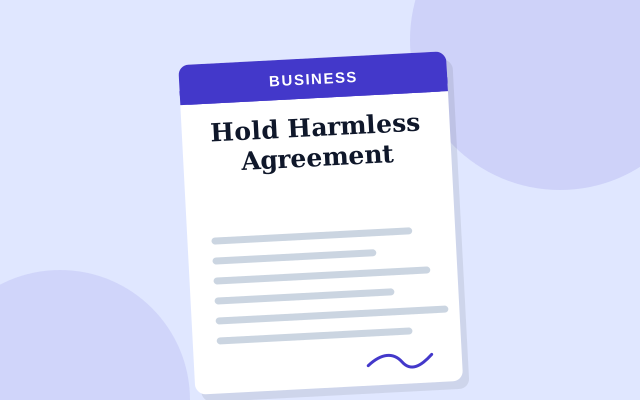
A hold harmless (indemnity) agreement says one party will not blame the other for losses from an activity, and will cover the other’s costs if a claim is made. Common for property use, events, contractors and equipment loans.
Free Hold Harmless Agreement template
Fill in the blanks: the document updates as you type. Nothing you enter leaves your browser.
Hold Harmless Agreement
This Hold Harmless Agreement is between ____ ("Indemnitor") and ____ ("Indemnitee").
1. Activity
This agreement covers ____ from ____ through ____ (the "Activity").
2. Hold harmless and indemnity
Indemnitor agrees to hold harmless, defend and indemnify Indemnitee from any claims, losses, damages, liabilities and reasonable attorney fees arising from Indemnitor’s participation in or conduct of the Activity, except to the extent caused by Indemnitee’s gross negligence or willful misconduct.
3. Type
This agreement is: ____. If mutual, each party gives the protections in Section 2 to the other.
4. Insurance
Each party is responsible for maintaining any insurance it considers appropriate.
5. Governing law
This agreement is governed by the law of ____. If any part is unenforceable, the rest remains in effect.
Indemnitor: __ Date: __
Indemnitee: __ Date: __
This free template is general information, not legal advice, and may not suit your state or situation. Some documents must be signed before witnesses or a notary. For anything important, have a lawyer review it.
Hold harmless vs release of liability
A release of liability gives up your own right to sue. A hold harmless agreement goes further: you also agree to protect the other party from claims by others related to the activity.
Unilateral or mutual
Unilateral: one side protects the other (e.g., a contractor protects a homeowner). Mutual: both sides protect each other from claims caused by their own actions.
Enforceability
Courts often won’t enforce indemnity for gross negligence or intentional acts, and some states limit indemnity in construction contracts. Keep the language clear and specific, and back it up with insurance.
Frequently asked questions
Is a hold harmless agreement legally binding?
Generally yes, if clear and signed, but courts limit protection for gross negligence and some states restrict certain indemnity clauses.
Questions from readers
Question about the Hold Harmless Agreement? Ask it here. We answer common questions in general terms on this page. This is not legal advice.